The Stolen Schwinn & The Columbia Gym: How Officer Joe Martin Forged Muhammad Ali
The Stolen Schwinn & The Columbia Gym: How Officer Joe Martin Forged Muhammad Ali
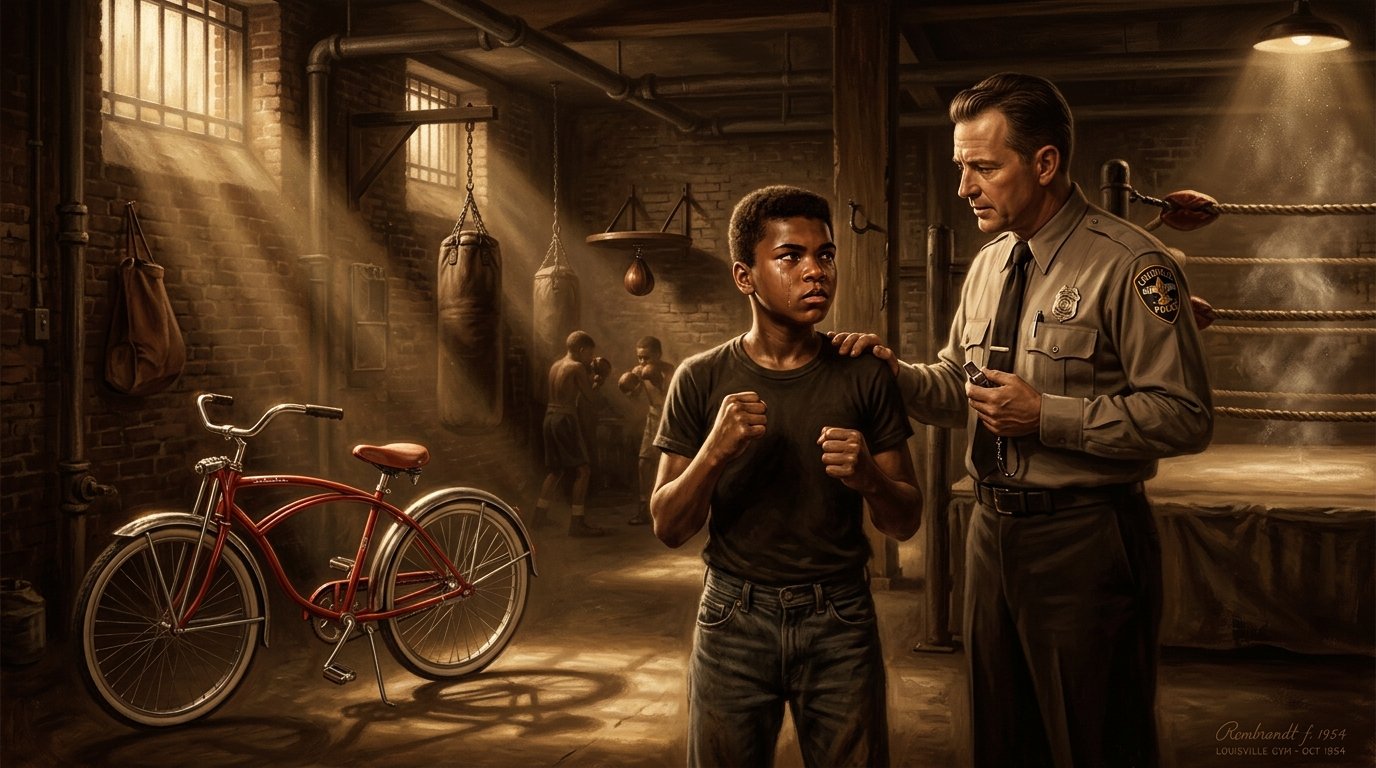
In October 1954, a crying 12-year-old boy in Louisville, Kentucky vowed to “whup” whoever stole his red Schwinn bicycle. The police officer who took the report didn’t dismiss the boy’s fury—instead, he led him into the chalk-dusted basement of Columbia Auditorium and handed him boxing gloves. That single encounter between Cassius Clay and Officer Joe Elsby Martin ignited the greatest athletic odyssey of the twentieth century.
Explore the Complete Louisville Muhammad Ali Pillar Series
- • Master Guide: Hometown Legacy & Pilgrimage
- • Ch. 1: The Stolen Schwinn & Columbia Gym CURRENT
- • Ch. 2: 3302 Grand Ave & Central High
- • Ch. 3: The 11 Bourbon Executives Syndicate
- • Ch. 4: The Ali Center & Six Core Principles
- • Ch. 5: Cave Hill Cemetery Memorial
1. The Rainy Night at the Louisville Home Show
On a drizzly autumn evening in October 1954, 12-year-old Cassius Clay and his friend Johnny Willis rode their bicycles to the Louisville Home Show at Columbia Auditorium (now part of Spalding University at 824 S. 4th Street). Cassius had just received a prized, brand-new red Schwinn bicycle purchased by his father, Cassius Sr., who had saved meticulously from his commercial billboard painting earnings.
After spending hours collecting free popcorn, balloons, and candy from vendor booths, the boys returned to the bicycle racks outside. The red Schwinn was gone. Heartbroken and enraged, Cassius was directed to the basement where Louisville police officer Joe Elsby Martin operated a youth recreation and amateur boxing program.
The Immortal Exchange That Changed Sports History
With tears streaming down his face, young Cassius declared: “I’m gonna whup whoever stole my bike!”
Officer Martin looked at the skinny, 89-pound youngster and calmly replied: “Well, you’d better learn how to fight before you start looking for him.”
2. Life in the Basement: The Columbia Gym Crucible
The basement of Columbia Auditorium was neither glamorous nor well-ventilated. The air hung thick with damp sweat, winter steam heat, leather oil, and chalk. Yet under Joe Martin’s strict discipline, it became a laboratory of boxing precision.
Martin was not interested in reckless street brawlers. He emphasized balance, rhythm, defensive posture, and conditioning. Unlike conventional trainers who insisted young fighters keep their hands glued to their ears, Martin noticed young Cassius possessed an extraordinary kinetic gift: reflexive head movement. Instead of blocking punches, Cassius pulled his head back by mere centimeters, allowing his opponent’s gloves to slice empty air before countering with lightning speed.
3. Tomorrow’s Champions & The Television Debut
Joe Martin hosted a weekly televised amateur boxing broadcast on local NBC affiliate WAVE-TV titled “Tomorrow’s Champions.” Just six weeks after walking into the gym, Cassius made his amateur debut on the program, winning a three-round split decision over another local youth, Ronnie O’Keefe.
The television appearance electrified Cassius. Seeing himself on the screen ignited an insatiable appetite for the spotlight. From that night forward, Cassius arrived at Columbia Gym before anyone else, training six days a week for the next six years.
Cassius Clay’s Louisville Amateur Record (1954–1960)
4. Visiting Columbia Gym Today at Spalding University
Today, Columbia Auditorium has been preserved and integrated into the urban campus of Spalding University (824 S. 4th Street, Louisville, KY 40203). Known as the Spalding University Center, the building honors Ali’s origin with historical markers and commemorative exhibits.
Visitors walking through downtown Louisville can stand in the very spot where the red Schwinn was stolen and reflect on how a moment of childhood heartbreak transformed an unranked local boy into a global icon of courage, defiance, and peace.
The Central Kentucky Abolitionist Connection
While Louisville was Ali’s hometown and lifelong sanctuary, his birth name and fierce fighting spirit trace directly to Central Kentucky. Cassius Marcellus Clay Jr. was named after his father, who was named in tribute to the radical 19th-century abolitionist General Cassius Marcellus Clay of Whitehall and Lexington—who defended his anti-slavery newspaper The True American with brass cannons against pro-slavery mobs.
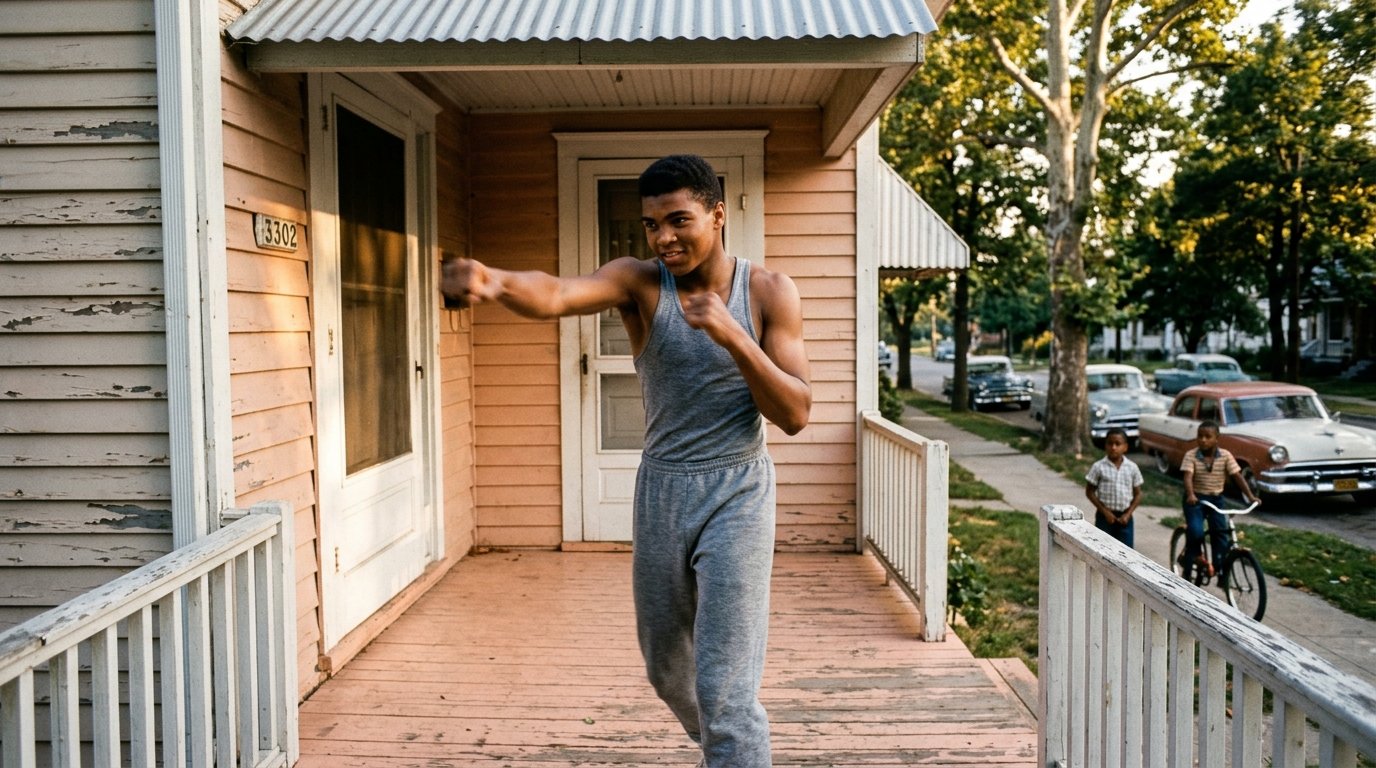
West End Boyhood: 3302 Grand Avenue & Central High in Jim Crow Louisville
Porch shadowboxing, heavy combat boot roadwork through segregated Chickasaw Park, and Principal Wilson’s prophecy at Central High.
The Louisville Muhammad Ali Knowledge Vault
Explore all six interconnected chapters in our definitive topical authority series honoring Derby City’s greatest champion:
The definitive overarching guide to Muhammad Ali’s birthplace, West End landmarks, and complete Louisville pilgrimage trail.
The October 1954 Home Show bicycle theft, the basement gym crucible, and the police officer who handed Cassius his first boxing gloves.
Porch shadowboxing, heavy combat boot roadwork through segregated Chickasaw Park, and Principal Wilson’s prophecy at Central High.
How 11 prominent Louisville whiskey executives protected Cassius from mob promoters, established a 15% trust, and hired Angelo Dundee.
Inside the 96,750-sq-ft cultural monument on the Ohio River, the 1996 Olympic Torch, and the Six Principles for social justice.
Section 9, Lot 33 along the painted green line: Islamic orientation, the headstone inscription, and the 2016 funeral procession.
Continue Exploring Derby City
Extend your journey with our definitive guides to Louisville’s world-famous heritage institutions, sporting cathedrals, and culinary landmarks:


Download The 2026 Louisville Heritage Field Guide & Interactive Route Map
Planning your cultural pilgrimage? Receive our curated PDF Field Guide featuring turnkey turn-by-turn GPS coordinates for all 6 Muhammad Ali landmarks, VIP parking secrets, Churchill Downs access tips, and Museum Row dining recommendations.