The Louisville Lip & The Greatest: Muhammad Ali’s Hometown Legacy, West End Roots & The Definitive Louisville Pilgrimage
The Louisville Lip & The Greatest: Muhammad Ali’s Hometown Legacy & Pilgrimage
Before he was crowned “The Greatest of All Time,” three-time World Heavyweight Champion, and global humanitarian, Muhammad Ali was a fast-talking kid named Cassius Marcellus Clay Jr., born in Louisville on January 17, 1942. From his childhood in the West End’s Parkland neighborhood and his first punches in the basement of Columbia Gym to winning gold at the 1960 Rome Olympics and resting eternally in Cave Hill Cemetery, Louisville was Ali’s anchor, his moral compass, and his beloved home.
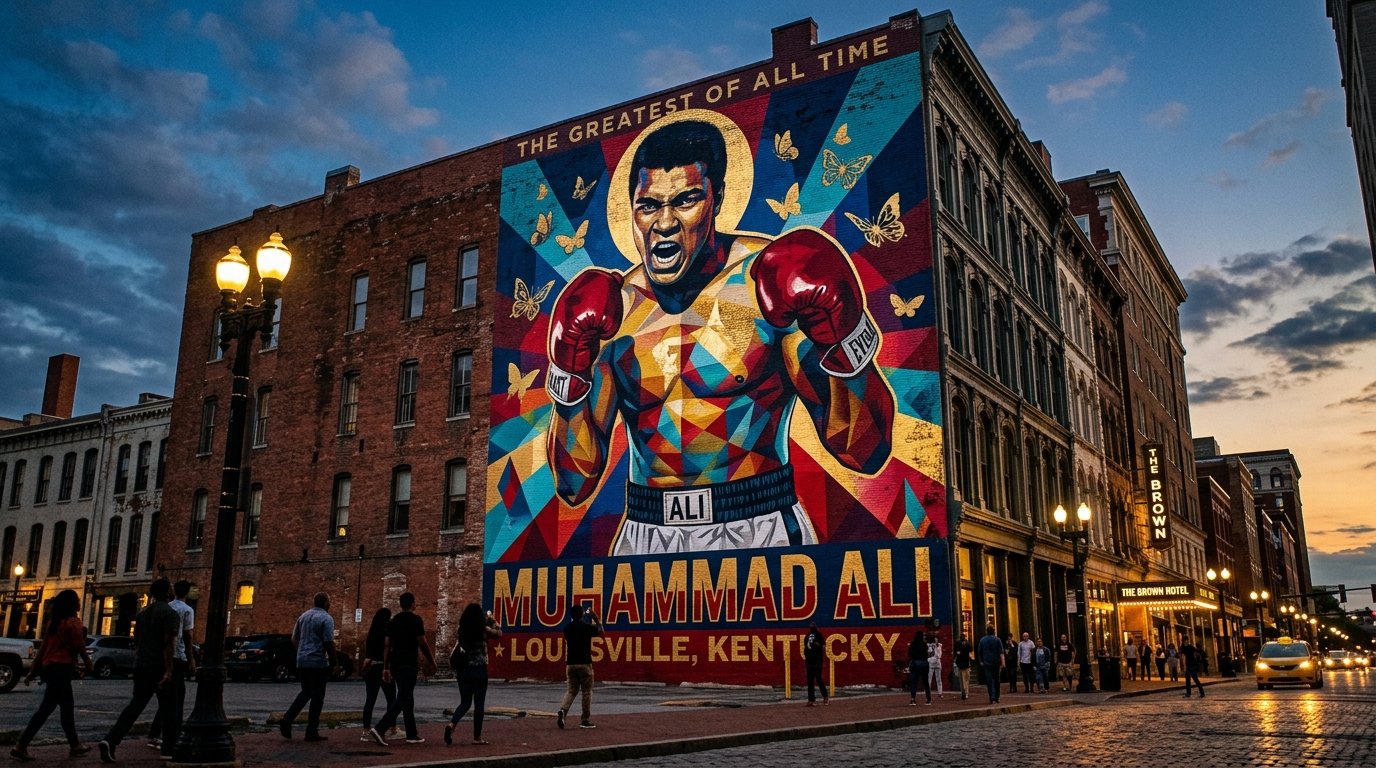
Explore the Complete Louisville Muhammad Ali Pillar Series
- • Master Guide: Hometown Legacy & Pilgrimage CURRENT
- • Ch. 1: The Stolen Schwinn & Columbia Gym
- • Ch. 2: 3302 Grand Ave & Central High
- • Ch. 3: The 11 Bourbon Executives Syndicate
- • Ch. 4: The Ali Center & Six Core Principles
- • Ch. 5: Cave Hill Cemetery Memorial
Louisville Hometown Landmarks & Historical Chronology
1. Growing Up at 3302 Grand Avenue (Parkland Neighborhood)
Young Cassius Clay grew up in a snug four-room, wood-frame cottage at 3302 Grand Avenue in Louisville’s West End. His father, Cassius Marcellus Clay Sr., was a talented billboard and church painter who filled the house with music and art. His mother, Odessa Grady Clay, was a devoted Baptist who nurtured her sons Cassius and Rudolph (later Rahman Ali) with deep Christian values.
Today, the Muhammad Ali Childhood Home Museum has been painstakingly restored to its exact 1955 appearance, featuring family artifacts, early boxing memorabilia, and the very front steps where young Cassius practiced his lightning-fast shadow boxing.
→ Read the deep-dive report: West End Boyhood, 3302 Grand Ave & Central High School
2. The Stolen Red Schwinn: Fate in the Basement of Columbia Gym
In October 1954, 12-year-old Cassius rode his brand-new red Schwinn bicycle to the Louisville Home Show at Columbia Auditorium (824 S. 4th Street). When he emerged, the bicycle had been stolen. Tearful and furious, he sought out a police officer to report the crime. That officer was Joe Elsby Martin, who ran a youth boxing gym in the auditorium’s basement.
When Cassius vowed to “whup” whoever stole his bike, Martin gave him the advice that altered sports history: “Well, you’d better learn how to fight before you start looking for him.” For the next six years, six days a week, Cassius trained in that basement gym, sparring against local talent and developing his trademark evasive footwork.
→ Read the full story: The Stolen Schwinn & How Officer Joe Martin Forged Muhammad Ali
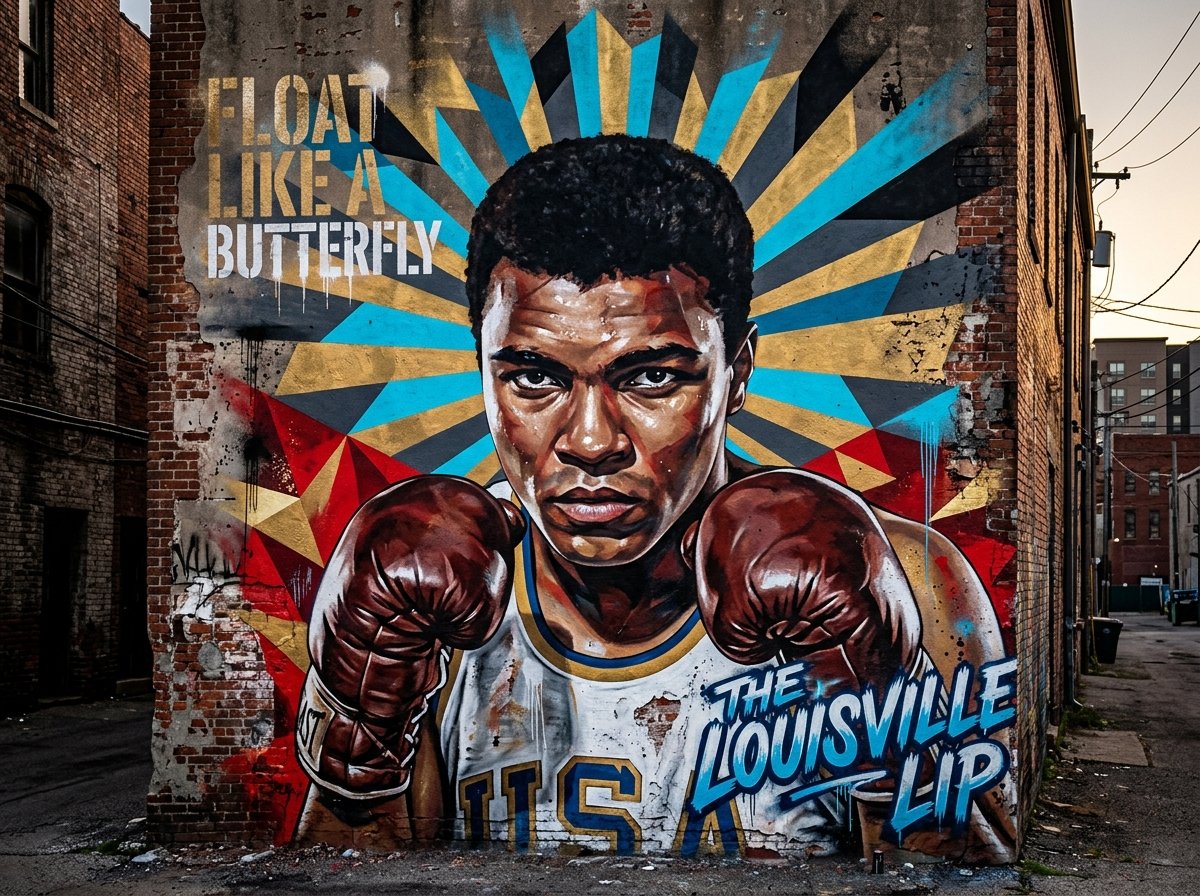
The Central High Spirit & Roadwork
Before morning classes at Louisville’s historic Central High School on Chestnut Street, Cassius was already running five miles through Chickasaw Park and Shawnee Park along the Ohio River, wearing heavy work boots instead of running shoes to strengthen his legs.
His principal, Atwood S. Wilson, predicted his future greatness when skeptics noted his poor grades: “Cassius Clay will bring more honor to this high school than all of your honor-roll students combined.”
3. The 11-Man Louisville Sponsoring Group
When Cassius returned from the 1960 Rome Olympics with his gold medal, he required professional financial backing. Rather than signing with mob-controlled promoters in New York or Chicago, he partnered with The Louisville Sponsoring Group—a syndicate of eleven prominent white Louisville businessmen led by William Faversham Jr., vice president of whiskey distiller Brown-Forman.
The syndicate provided an honest contract, guaranteeing young Clay a living wage, putting 15% of his earnings into a deferred trust fund, and hiring legendary trainer Angelo Dundee to helm his corner at the 5th Street Gym in Miami Beach.
→ Explore the syndicate: The 11 Bourbon Executives Who Backed Cassius Clay
The Central Kentucky Abolitionist Connection
While Louisville was Ali’s hometown and lifelong sanctuary, his birth name and fierce fighting spirit trace directly to Central Kentucky. Cassius Marcellus Clay Jr. was named after his father, who was named in tribute to the radical 19th-century abolitionist General Cassius Marcellus Clay of Whitehall and Lexington—who defended his anti-slavery newspaper The True American with brass cannons against pro-slavery mobs.
4. The Complete Louisville Muhammad Ali Pilgrimage Trail
For visitors to Derby City, this self-guided pilgrimage connects the essential landmarks of Muhammad Ali’s life:
1 Muhammad Ali Childhood Home Museum
Address: 3302 Grand Avenue, West Louisville | Highlights: Meticulously restored to its 1955 era. Stand on the front porch where young Cassius shadowboxed and view family photographs and original furnishings.
2 Columbia Gym at Spalding University
Address: 824 S. 4th Street, Downtown Louisville | Highlights: The former Columbia Auditorium where his stolen bike led him to Joe Martin. Now part of Spalding University’s campus center.
3 Central High School
Address: 1130 W. Chestnut Street, Louisville | Highlights: Historic African American high school where Ali graduated in 1960. Today, the school’s boxing and athletic academy honors his legacy.
4 Freedom Hall at Kentucky Exposition Center
Address: 937 Phillips Lane, Louisville | Highlights: Site of his professional boxing debut on October 29, 1960, defeating Tunney Hunsaker, and where he fought six subsequent professional bouts before adoring home crowds.
5 The Muhammad Ali Center
Address: 144 N. 6th Street (Museum Row), Downtown Louisville | Highlights: 96,750 square feet of world-class interactive exhibits, historical films, and educational programs centered on his Six Core Principles: Confidence, Conviction, Dedication, Giving, Respect, and Spirituality.
→ In-depth visitor guide: The Muhammad Ali Center & Six Core Principles
6 Cave Hill Cemetery & Arboretum
Address: 701 Baxter Avenue, Louisville (Section 9, Lot 33) | Highlights: A serene 296-acre Victorian cemetery and arboretum. Follow the painted green centerline to Ali’s granite monument inscribed: “Service to others is the rent you pay for your room here on earth.”
→ Complete pilgrimage guide: Visiting Muhammad Ali’s Memorial at Cave Hill
Frequently Asked Questions
Where was Muhammad Ali born and raised in Louisville?
Muhammad Ali was born at Louisville General Hospital on January 17, 1942, and grew up at 3302 Grand Avenue in the Parkland neighborhood of West Louisville.
Can you visit Muhammad Ali’s grave in Louisville?
Yes, Muhammad Ali is buried at Cave Hill Cemetery (701 Baxter Ave, Louisville) in Section 9, Lot 33. The cemetery is open to the public daily, and visitors can follow green roadway lines directly to his memorial.
What is the connection between Muhammad Ali and Lexington?
Ali’s birth name, Cassius Marcellus Clay Jr., was passed down from his father, who was named in tribute to General Cassius Marcellus Clay of Whitehall and Lexington, Kentucky—the famous 19th-century abolitionist who fought pro-slavery mobs in Central Kentucky.
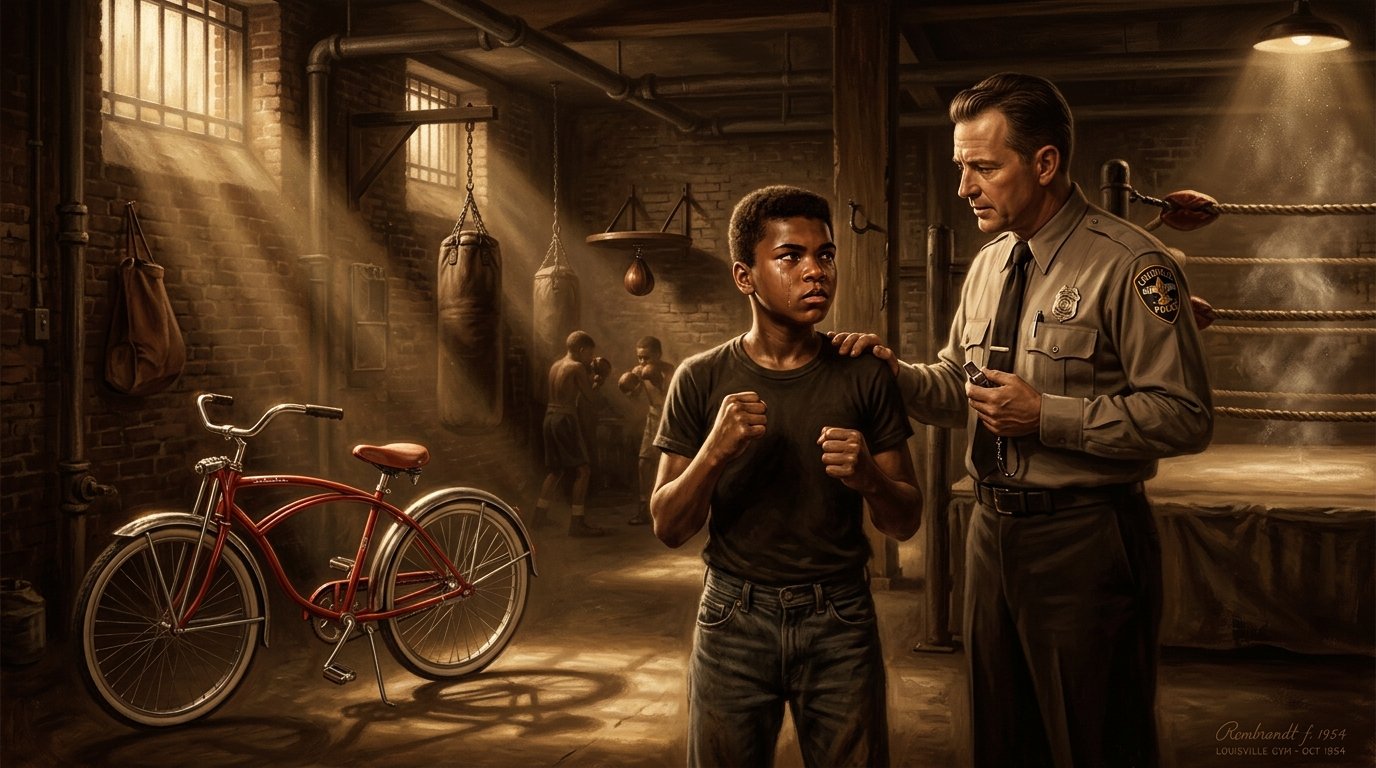
The Stolen Schwinn & The Columbia Gym: How Officer Joe Martin Forged Ali
The October 1954 Home Show bicycle theft, the basement gym crucible, and the police officer who handed Cassius his first boxing gloves.
The Louisville Muhammad Ali Knowledge Vault
Explore all six interconnected chapters in our definitive topical authority series honoring Derby City’s greatest champion:
The definitive overarching guide to Muhammad Ali’s birthplace, West End landmarks, and complete Louisville pilgrimage trail.
The October 1954 Home Show bicycle theft, the basement gym crucible, and the police officer who handed Cassius his first boxing gloves.
Porch shadowboxing, heavy combat boot roadwork through segregated Chickasaw Park, and Principal Wilson’s prophecy at Central High.
How 11 prominent Louisville whiskey executives protected Cassius from mob promoters, established a 15% trust, and hired Angelo Dundee.
Inside the 96,750-sq-ft cultural monument on the Ohio River, the 1996 Olympic Torch, and the Six Principles for social justice.
Section 9, Lot 33 along the painted green line: Islamic orientation, the headstone inscription, and the 2016 funeral procession.
Continue Exploring Derby City
Extend your journey with our definitive guides to Louisville’s world-famous heritage institutions, sporting cathedrals, and culinary landmarks:

Download The 2026 Louisville Heritage Field Guide & Interactive Route Map
Planning your cultural pilgrimage? Receive our curated PDF Field Guide featuring turnkey turn-by-turn GPS coordinates for all 6 Muhammad Ali landmarks, VIP parking secrets, Churchill Downs access tips, and Museum Row dining recommendations.